Fuerteventura surf season: what to expect month by month
Published on · 4 min read
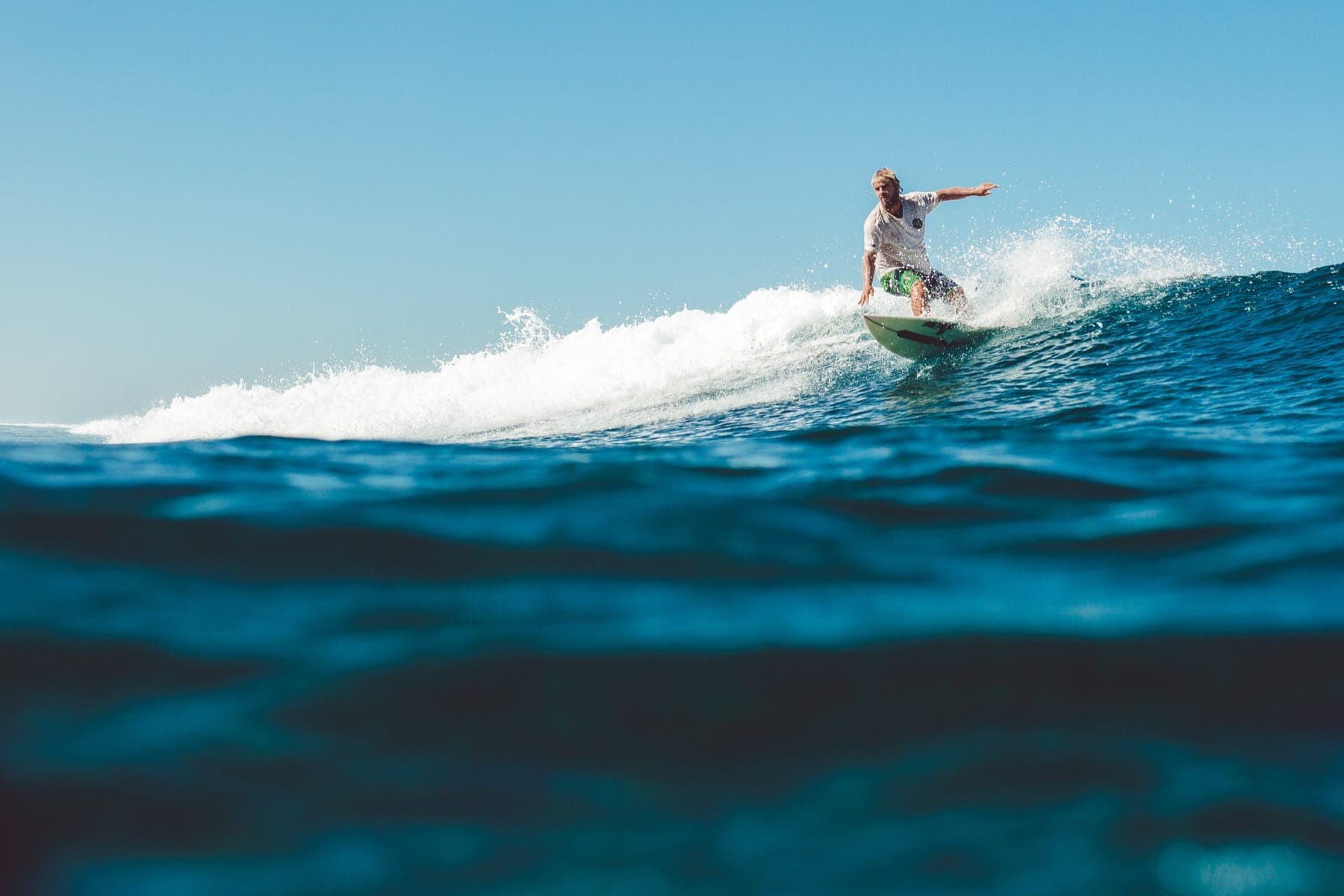
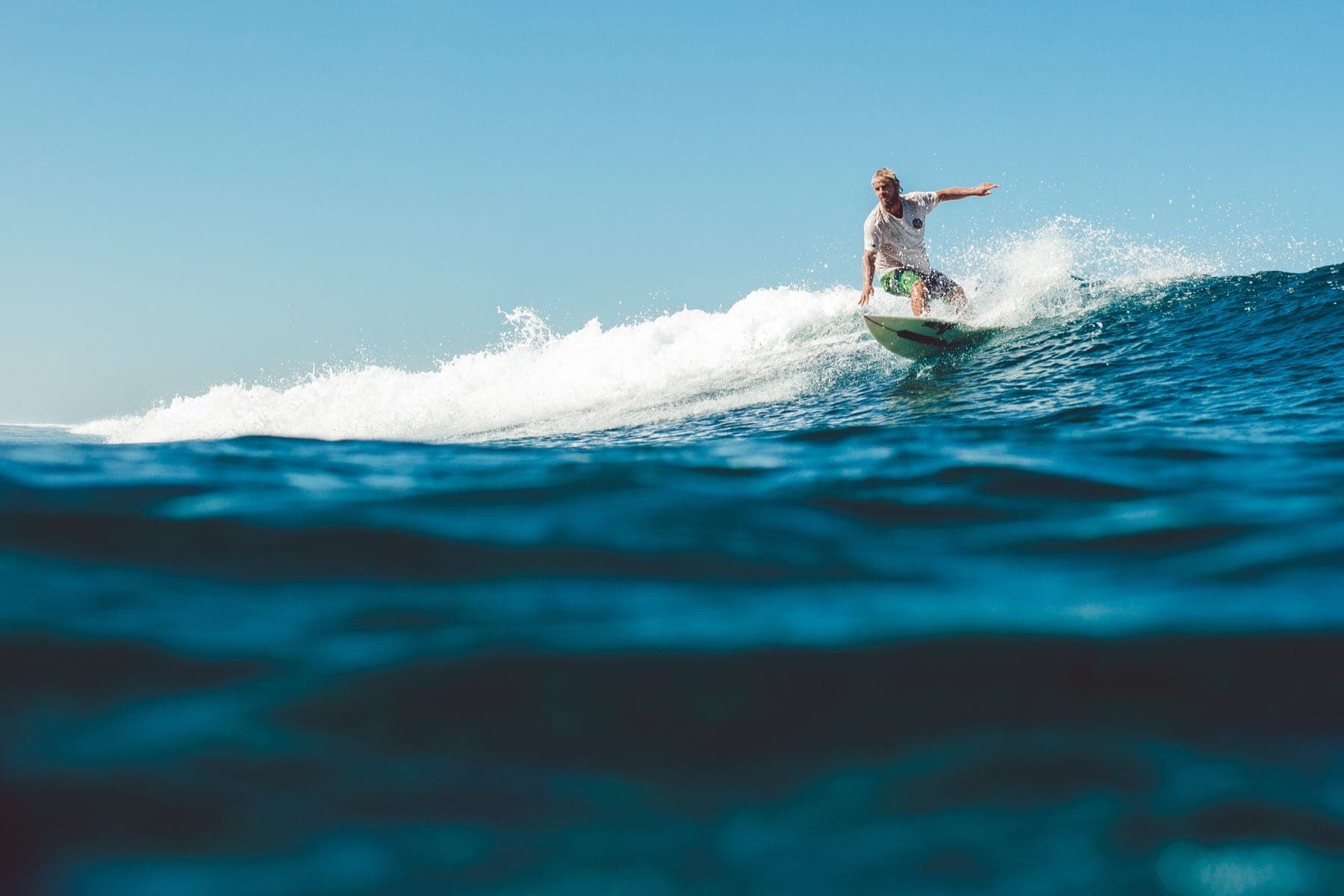
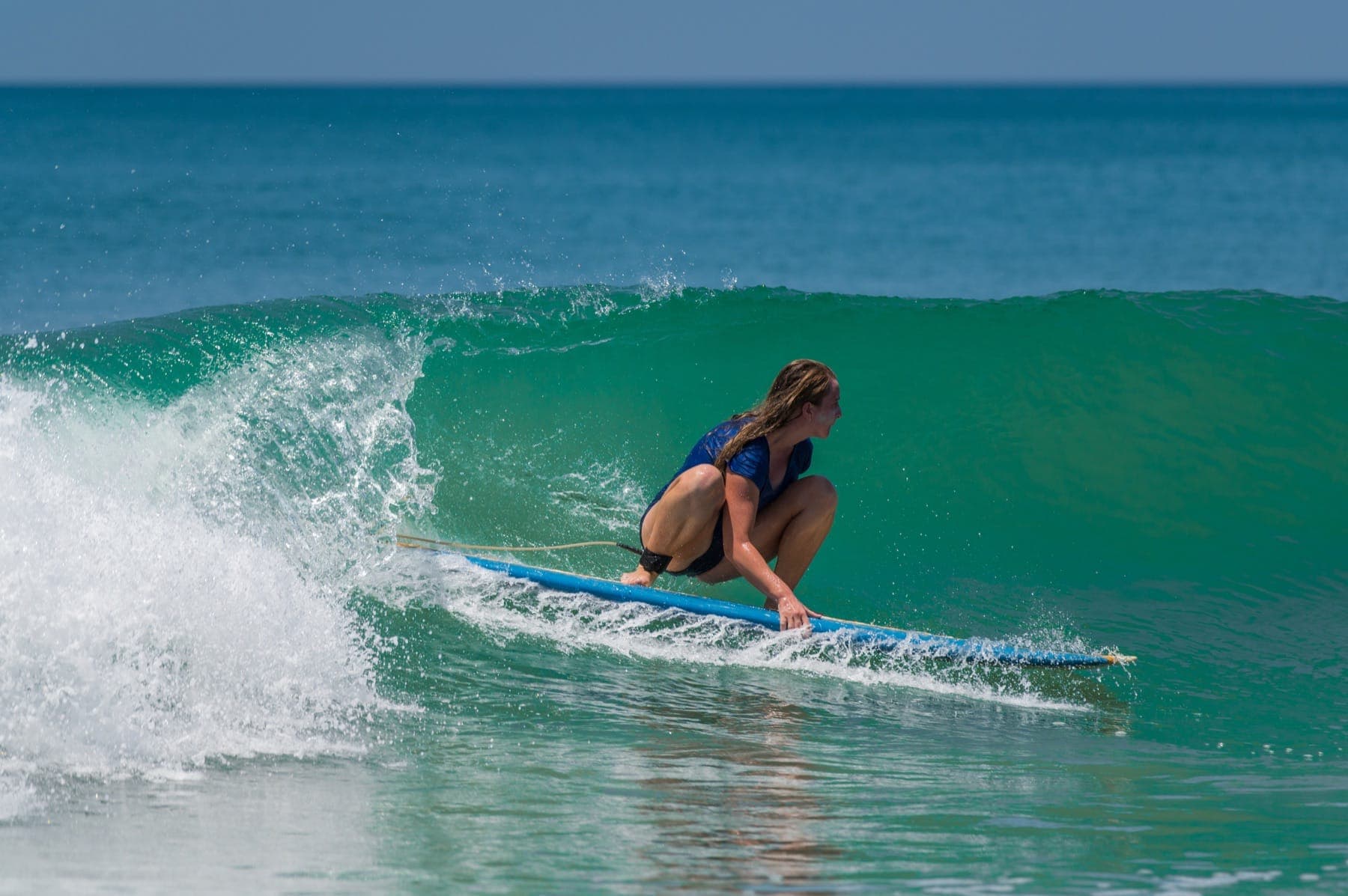
The Fuerteventura surf season never really stops: there are waves all year. What changes is the size, the wind and how cold the water feels. From October to March the Atlantic swells are bigger and more consistent, which suits intermediate and advanced surfers. In summer the waves get smaller and friendlier, which is the easiest time to learn.
We live and surf in Corralejo, in the north of the island, and this guide puts together what we tell guests with long-term data from public sources, so you can pick the right month for your level.
In short
- October to March: bigger, more consistent swells. Best for intermediate and advanced surfers.
- June to September: smaller waves. Best for beginners. Trade winds are most constant from May to September.
- Water: about 18 °C at its coolest (February–March) and about 23 °C at its warmest (September–October).
- Wetsuit: a 3/2 plus booties in winter; a 2 mm long-sleeve or a 3/2 at most in summer.
- Every month: choose the spot for the day's conditions, not the other way round.
Fuerteventura surf season at a glance
| Month | Swell | Who it suits | Average sea temperature (Corralejo) |
|---|---|---|---|
| January | Big season | Intermediate and advanced | 19.1 °C |
| February | Big season | Intermediate and advanced | 18.4 °C |
| March | Big season | Intermediate and advanced | 18.3 °C |
| April | Shoulder month | Check the forecast | 19.0 °C |
| May | Shoulder month | Check the forecast | 19.9 °C |
| June | Small-wave season | Beginners | 21.0 °C |
| July | Small-wave season | Beginners | 21.8 °C |
| August | Small-wave season | Beginners | 22.5 °C |
| September | Small-wave season | Beginners | 23.1 °C |
| October | Big season starts | Intermediate and advanced | 22.9 °C |
| November | Big season | Intermediate and advanced | 21.6 °C |
| December | Big season | Intermediate and advanced | 20.2 °C |
Sea temperatures are long-term monthly averages for Corralejo from seatemperature.info; other sources differ by about a degree. The swell seasons follow The Surf Atlas, which gives October to March for big swell and June to September for beginners. April and May sit between the two, so treat them day by day.
Winter: October to March
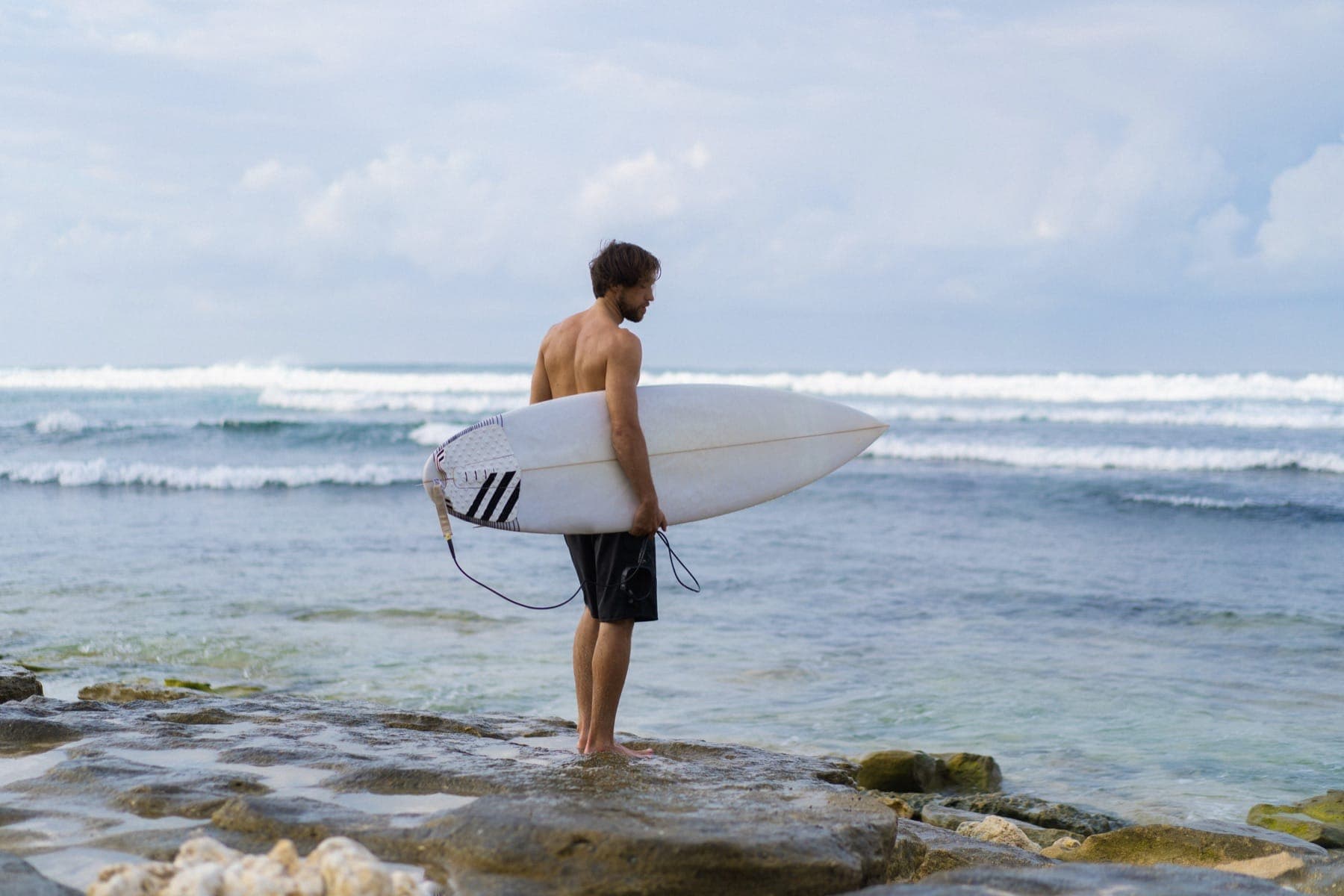
This is when the big North Atlantic swells arrive. The reef breaks of the North Shore come alive, and spots like El Hierro, a powerful reef that can barrel with a north swell, are for experienced surfers only. Surf-forecast.com notes that El Cotillo has its most consistent conditions in winter, most often in January.
Beginners can still surf in winter, but they need to be more careful about where and when. Choose sheltered spots on smaller days, go with a school and ask locally. The nearest spot to our house in Corralejo is a 5-minute walk away and usually works from October to February, though not every day.
Wetsuit: a 3/2 plus booties.
Summer: June to September
Smaller, friendlier waves make summer the easiest time to start. The east-coast spots close to Corralejo, such as Playa del Moro and Glass Beach, are at their best in summer, and El Cotillo's beach is often recommended for learners at this time of year.
Summer is also the windiest stretch: the trade winds are most constant from May to September. That is great news for kitesurfers (see learn to kite this summer at Coco) and something surfers plan around: when the wind blows onshore on one coast, look for the coast where it blows offshore.
Wetsuit: a 2 mm long-sleeve or a 3/2 at most.
The shoulder months: April, May, October and November
Between the two seasons, conditions can go either way. Some days look like winter, others like summer. This is when checking the forecast every evening pays off most, and when a car is most useful, because the spot that works may be on the other side of the north.
If you are a beginner travelling in these months, plan on lessons and a flexible schedule rather than a fixed spot.
How to choose your month
- Never surfed before: come between June and September and book lessons. Our guide to beginner surf spots in Fuerteventura explains what to look for.
- Improving: spring and autumn give you a mix of days; winter on the smaller days.
- Experienced: October to March for the North Shore reefs.
- Working remotely as well: any month works if you plan around the forecast; read how a surf and work day fits together.
For where to go once you are here, see the best surf spots in Fuerteventura by level.
Conclusion
The Fuerteventura surf season is all year: big and consistent in winter, small and easy in summer, with water that rarely drops below 18 °C. Pick the month for your level, pack the right wetsuit and let the forecast choose the spot. When you know your dates, have a look at surfing from Coco, where you can rent boards and wetsuits at the house.
Quick answers
When is the surf season in Fuerteventura?
There are waves all year. The swells are bigger and more consistent from October to March; summer brings smaller, friendlier waves that suit beginners.
What is the best month to learn to surf in Fuerteventura?
Summer, roughly June to September, is usually the easiest time for beginners because the waves are smaller. Whatever the month, choose a spot for your level and go with a school or someone who knows the conditions.
How cold is the sea in Fuerteventura?
Around 18 °C at its coolest, in February and March, and around 23 °C at its warmest, in September and October, according to long-term averages for Corralejo.
What wetsuit do I need for surfing in Fuerteventura?
In winter a 3/2 plus booties; in summer a 2 mm long-sleeve or a 3/2 at most. Booties help all year because many spots have volcanic reef.